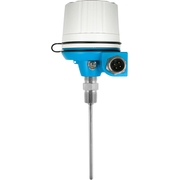
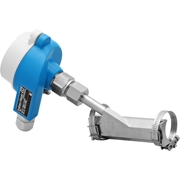
HART is a communication protocol used in process automation that transmits a 4-20 mA analog signal and digital communication over the same pair of wires.
Due to a large global installed base, HART is widely established in process automation.
While HART communication protocol is known for its use for parameterization, it can support much more. With the right tools, users can access device status, diagnostics, and multivariable process information from both new and existing field devices. Depending on the chosen architecture, HART device data can be integrated into control systems and asset management tools.
All device information can be accessed by a FDI tool or an FDT frame application. Endress+Hauser offers DTMs and EDDs for HART devices and provides files and certificates in the download area of each product.
Discover Endress+Hauser’s wide, well-established portfolio of HART-compatible measuring instruments.
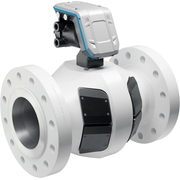
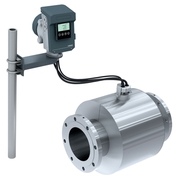
Measured variablesVolumetric flow a. c., volume a. c., gas velocity, Speed of sound, optional volume correction via integrated, electronic volume corrector (EVC)
Measuring MediumNatural gas (with up to 30% hydrogen), air, natural gases containing increased levels of CO2, N2, H2S, O2, H2
Nominal pipe size3 ″ ... 56 ″ (DN 80 ... DN 1400), other nominal pipe sizes on request
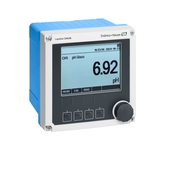
Appareil de terrain deux fils pour zones explosibles et non explosibles et applications hygiéniques dans l'industrie chimique, des sciences de la vie et agroalimentaire
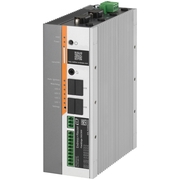
Number of applicationsSupport up to 4 gas or 4 liquid runs per module (Flow-X/M, Flow-X/C)
Inputs6x analog transmitter input, high accuracy Input types are 4 to 20 mA, 0 to 20 mA, 0 to 5 V, 1 to 5 V Accuracy mA inputs; 0.002% FS at 21 °C (69.8 °F), 0.008% at full ambient range of 0 ... 60 °C (32 °F ... 140 °F), long-term stability 0.01% per year Resolution 24 bits. Analog inputs share same ground floating in relation to all other electronics. 2x resolution 0.02 °C (0.04 °F) for 100 ohms input. Error depending on range 0 ... 50 °C (32 °F ... 122 °F): Error <0.05 °C (0.09 °F) or better; -220 to +220 °C (–396 °F ... +428 °F): Error <0.5 °C (<0.9 °F.) or better 4x Independent HART loop inputs, on top of 4 to 20 mA signals Support includes multi-drop for each transmitter loop, as well as support for redundant FC operation 4x Single or dual pulse input. Adjustable trigger level at various voltages. Frequency range up to 10 kHz for single and dual pulse. Compliant with ISO6551, IP252, and API 5.5. True Level A and level B implementation. 4x Periodic time input, 100μs to 5000μs. Resolution < 1ns 16x Digital status inputs. Resolution 100ns (10MHz) 4x Supports 1, 2 and 4 sphere detector configurations mode. Resolution 100ns (10MHz) 2x RS485 / RS232 serial port for ultrasonic meter, printer or generic, 115kb Flow-X/P: 4x RS485 / RS232 and 1x RS232 Flow-X/C: 2x RS485 / RS232 and 1x RS485 optional 2x RS485 / RS232 and 2x RS485 2x RJ45 Ethernet interface, TCP/IP
Outputs4x Analog output for process outputs and flow / pressure control. Resolution 14 bits, 0.075% FS. Analog outputs share same ground floating in relation to all other electronics. 16x Digital output, open collector. Rating 100mA @24V 4x Pulse outputs open collector, 0.01 to 500 Hz 1x Meter pulse output for remote proving flow computers. Resolution 100ns (1MHz) 4x Frequency outputs for emulation of flowmeter signals. Maximum frequency 10KHz, accuracy 0.1%
PrécisionClass AA selon IEC 60751 Class A selon IEC 60751 Class B selon IEC 60751 Class speciale ou standard selon ASTM E230 Class 1 ou 2 selon IEC 60584-2
Temps de réponset90 à partir de < 1,5 s iTHERM QuickSens selon la configuration
Pression process max. (statique)en fonction de la configuration
Gamme de temperature de servicePT100 TF iTHERM StrongSens: -50 °C ...500 °C (-58 °F ...932 °F) PT100 TF iTHERM QuickSens: -50 °C …200 °C (-58 °F …392 °F) PT100 WW: -200 °C ...600 °C (-328 °F ...1.112 °F) PT100 basic TF: -50 °C ...200 °C (-58 °F ...392 °F) Typ K: max. 1.100 °C (max. 2.012 °F) Typ J: max. 800 °C (max. 1.472 °F) Typ N: max. 1.100 °C (max. 2.012 °F)
Précisiondependant de l'application Class AA selon IEC 60751 Class A selon IEC 60751 Class B selon IEC 60751 Class speciale ou standard selon ASTM E230 Class 1 ou 2 selon IEC 60584-2
Temps de réponseen fonction de l'application
Gamme de temperature de service-196 °C…400 °C (-320,8 °F...752 °F)
Nous accordons de l'importance à votre vie privée
Nous utilisons des cookies pour améliorer votre expérience de navigation, collecter des statistiques afin d'optimiser la fonctionnalité du site et fournir des publicités ou du contenu sur mesure.
En sélectionnant "Accepter tout", vous consentez à notre utilisation des cookies.
Pour plus de détails, veuillez consulter notre politique en matière de cookies .