Why Raman spectroscopy matters for hydrogen liquefaction and quality assurance
Precise, transformative, reliable

In brief
- Real-time, accurate measurement of hydrogen isomers: As hydrogen becomes central to global decarbonization, Raman spectroscopy provides direct molecular-level identification of orthohydrogen and parahydrogen through distinct rotational fingerprints, enabling precise, continuous monitoring essential for liquefaction control.
- Enhanced process control and efficiency: With non-invasive, online analysis performed at ambient conditions without disturbing the process, operators gain immediate insight into isomer ratios to optimize catalyst performance and liquefaction stability.
- Reduced boil-off and product loss: By accurately verifying the completeness of ortho-to-para conversion, Raman analytics help prevent residual exothermic reaction that drives boil-off gas (BOG), thereby minimizing product losses across the liquid hydrogen (LH₂) supply chain.
- Reliable quality assurance during transport and storage: High repeatability and robust chemometric modeling ensure stable para-H₂ quantification aligned with theoretical equilibrium values, supporting quality verification of shipped and stored liquid hydrogen.
- Support for safe and optimized liquefaction operations: Because Raman spectroscopy preserves the true ortho/para ratio even when samples warm to room temperature, it enables fast, safe hydrogen analysis without cryogenic handling, improving operational decision-making throughout liquefaction and storage.


The growing need for efficient hydrogen transportation and storage
As global demand increases, transporting hydrogen from production sites to end users becomes a central challenge. Hydrogen in its natural gaseous form has a low volumetric energy density, meaning it occupies a very large volume relative to the amount of energy it contains. This makes storage and transportation highly inefficient without further processing.
To overcome these limitations, hydrogen is increasingly expected to be liquefied, a practice long established in the natural gas industry (e.g., LNG). Liquefaction cools hydrogen to extremely low temperatures (20 K, or –253 °C), reducing its volume by a factor of nearly 800×. This dramatic reduction makes it far more practical to:
- Transport hydrogen over long distances by ship, truck, or rail
- Store large quantities at centralized hubs
- Distribute hydrogen to industries and fueling stations as part of a future global hydrogen economy
As such, hydrogen liquefaction opens pathways for global supply chains and large-scale adoption.
The critical role of hydrogen isomer monitoring
Hydrogen is rapidly becoming a key enabler of the global energy transition, particularly in sectors such as fertilizer production, refining, and chemical manufacturing.
However, hydrogen behaves uniquely at cryogenic temperatures. It exists in two spin isomers:
- Orthohydrogen (ortho-H₂) – dominant at ambient temperature (~75%)
- Parahydrogen (para-H₂) – dominant at cryogenic temperatures (>99% at 20 K)


As hydrogen cools to cryogenic temperatures, catalytic conversion to para‑H₂ must reach >99% to avoid exothermic reconversion and boil‑off losses during LH₂ storage.
During liquefaction, ortho-to-para conversion releases heat, and if this conversion is incomplete when hydrogen is cooled, the residual reaction can cause boil-off gas (BOG) and product loss throughout the supply chain. For operators of liquefaction, storage, and transport systems, accurate, real-time quantification of hydrogen isomers becomes essential for process efficiency and safety.
Why Raman spectroscopy is essential for H₂ applications
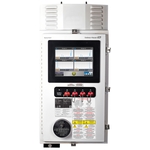
Raman spectroscopy is uniquely suited for measuring hydrogen’s ortho/para ratio because it directly captures each isomer’s molecular fingerprint. As LH₂ production and handling scale, this capability — combined with a field-ready deployable system — becomes increasingly important for operators who need accurate, real-time insight into isomer composition.
1. Direct, molecular-level identification
Whereas other technologies only measure para-H₂, Raman spectroscopy is able to distinguish ortho-H₂ and para-H₂ by measuring both of their signatures within a single spectrum. This eliminates reliance on indirect inference methods that can introduce uncertainty or significant error.
2. Real-time, online monitoring
Unlike laboratory-based or indirect analytical techniques, Raman spectroscopy systems enable:
- Continuous in-process monitoring
- Non-invasive measurement
- No sample conditioning
- No disruption to process conditions
This provides operators with immediate visibility into isomer ratios and supports proactive process control.
3. Accurate measurement at ambient temperature
Raman spectroscopy allows parahydrogen quantification at ambient conditions while preserving the true ortho/para ratio achieved during liquefaction. In an actual hydrogen liquefaction facility, the gas is cooled through multiple stages with different catalysts driving the spin-isomer conversion. Raman spectroscopy can be applied at each stage to verify ortho-para conversion efficiency, and because reconversion (para → ortho) is extremely slow without a catalyst, warming the hydrogen sample does not affect the measurable composition. This behavior:
- Removes the need for cryogenic analytical setups
- Enhances safety and speed
- Reduces measurement complexity
4. Superior to traditional measurement methods
Traditional approaches, which often rely on indirect physical‑property measurements, include:
- Calorimetry
- Thermal conductivity
- Speed-of-sound measurement
These methods face well‑known challenges, such as:
- High sensitivity to temperature and pressure fluctuations
- Inability to separate true parahydrogen from measurement errors
- Poor reliability when catalyst performance degrades
By contrast, Raman spectroscopy:
- Directly detects ortho- and para-H₂ simultaneously
- Provides immediate verification of incomplete liquefaction
- Helps distinguish process deviations from instrument or catalyst issues
- Captures all Raman-active species in one acquisition
Key Raman spectroscopy benefits
- Proven accuracy and repeatability in ortho- and para-H2 quantification to ensure tight control during hydrogen liquefaction and storage
- Reliable, real‑time insights for process optimization to reduce losses and safeguard product quality
- Minimal maintenance and operational simplicity with no cryogenic analytical equipment needed for faster and safer workflows

The bottom line - Raman insights for liquid hydrogen efficiency
Hydrogen is increasingly emerging as a pivotal element in the global transition toward cleaner, more sustainable energy systems. As countries and industries intensify efforts to reduce carbon emissions and move away from fossil‑fuel dependence, hydrogen stands out as a versatile and powerful energy carrier capable of supporting this transformation.
As hydrogen transitions from limited industrial use to a globally scaled energy carrier, liquefaction will play an increasingly vital role in transportation and storage. That shift elevates the importance of accurately understanding and controlling the ortho to parahydrogen conversion yield — a parameter that directly affects efficiency, boil-off behavior, and safety across the LH₂ supply chain.
Raman spectroscopy offers a uniquely powerful, practical, and future ready solution for meeting this measurement need, enabling operators to monitor isomer composition in real time, without cryogenic handling, and with the clarity required for a rapidly expanding hydrogen economy.
Frequently asked questions (FAQs)
Downloadable resource

References
- "Hydrogen liquefaction: a review of the fundamental physics, engineering practice and future opportunities." Energy & Environmental Science, RSC Publishing, DOI:10.1039 /D2EE00099G.
- “Hydrogen Liquefaction, Storage, Transport and Application of Liquid Hydrogen.” Wasserstoff‑Leitprojekte
- "Liquid Hydrogen: A Review on Liquefaction, Storage, Transportation, and Safety."
- "Liquid Hydrogen Delivery." U.S. Department of Energy.
- "Liquefying Hydrogen for Storage & Transport." Linde.
- National Aeronautics and Space Administration. Safety Standard for Hydrogen and Hydrogen Systems: Guidelines for Hydrogen System Design, Materials Selection, Operations, Storage and Transportation (NSS 1740.16). NASA Technical Reports Server.
- “Ortho‑Para Hydrogen Conversion.” Sustainability Directory, ESG Directory.
- "Quantitative In-situ Monitoring of Parahydrogen Fraction Using Raman Spectroscopy."
- Weitzel, D.H., Loebenstein, W. V., Draper, J. W., & Park, O. E. “Ortho-Para Catalysis In Liquid-Hydrogen Production.” Journal of Research of the National Bureau of Standards, vol. 60, no, 3, 1958, pp. 221-226. NIST.
- Wijnans, S. “Smart Management of Boil‑Off Gas Across the LH₂ Supply Chain.” Shell TechXplorer Digest, 2024.